

Why the Bathroom Renovation Process Matters for South Florida Homeowners
The bathroom renovation process is a carefully orchestrated sequence of steps that transforms your outdated space into a functional, beautiful retreat. Whether you’re dealing with a cramped powder room in Fort Lauderdale or planning a luxury master bath in Boca Raton, understanding this process is crucial for a successful, stress-free outcome.
Here’s the essential bathroom renovation process in order:
- Planning & Design – The foundational phase where you define your goals, establish a realistic budget, and create a functional layout that suits your lifestyle.
- Permits & Materials – Navigating local municipal requirements to obtain necessary approvals and ordering all your fixtures and materials, paying close attention to lead times.
- Demolition – The exciting (and messy) part where the old bathroom is carefully stripped away, removing fixtures, tiles, and any outdated systems to create a blank canvas.
- Rough-In Work – The critical behind-the-scenes work where licensed professionals install new plumbing lines, electrical wiring, and any necessary framing adjustments.
- Waterproofing & Tiling – A crucial step for longevity, especially in Florida, involving the application of moisture barriers before expertly installing your chosen tile.
- Fixture Installation – The phase where your vision comes to life as the new vanity, toilet, shower, tub, and lighting fixtures are put into place.
- Finishing Touches – The final details that complete the change, including painting, installing accessories like mirrors and towel bars, and undergoing a final inspection.
Most bathroom renovations in South Florida take 6-8 weeks to complete, with costs ranging from $15,000 for a basic refresh to $50,000+ for luxury makeovers. The timeline can be influenced by the complexity of the project and the permitting process in your specific municipality.
The renovation journey can feel overwhelming. This is especially true in Florida’s humid climate, where moisture control, proper ventilation, and mold prevention are non-negotiable elements of a quality build. Homeowners often underestimate the complexity, from coordinating multiple trades (plumbers, electricians, tilers, painters) to managing material deliveries and securing dumpsters for debris, all while navigating the potential for supply chain disruptions during hurricane season.
But here’s the truth: a well-planned bathroom renovation can recoup up to 57% of its cost at resale while dramatically improving your daily life. The key is understanding each phase, anticipating regional challenges, and making informed decisions along the way.
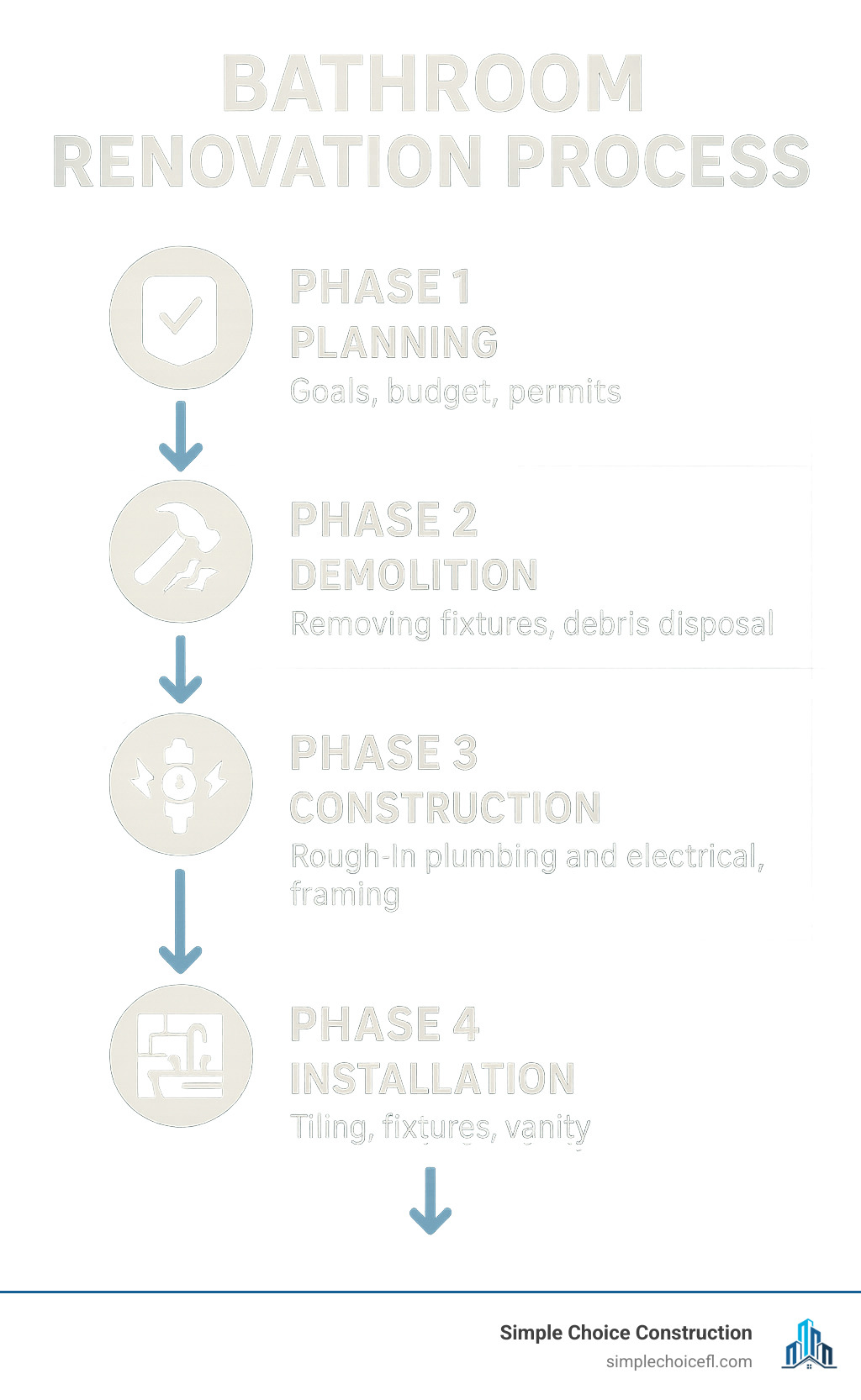
Bathroom renovation process terminology:
Phase 1: Planning Your Dream Bathroom
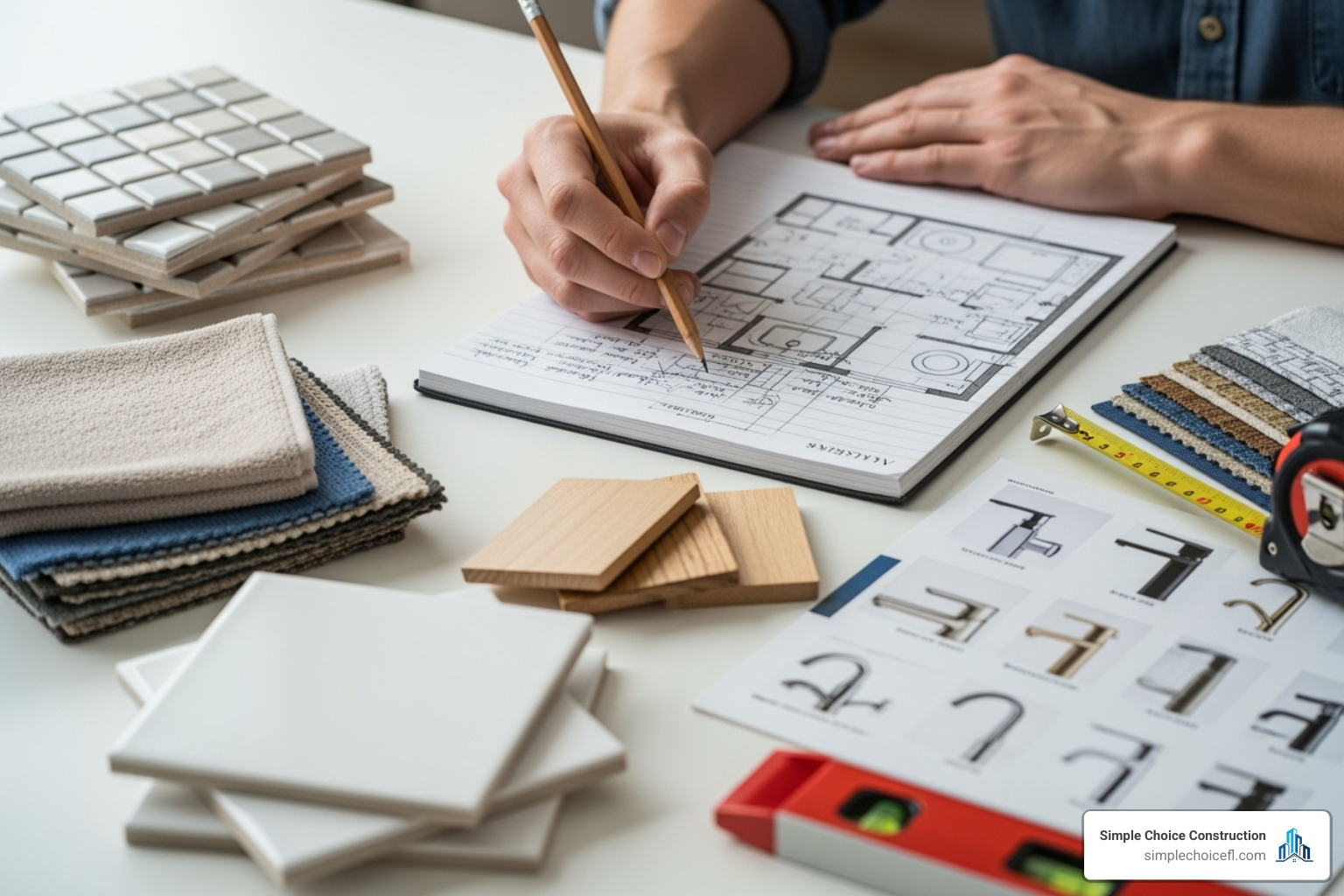
The most crucial step in any bathroom renovation process happens before you pick up a single tool or choose your first tile. It’s all about planning – and trust us, this phase will make or break your entire project.
Think of planning as your renovation GPS. Without it, you’ll find yourself lost in a maze of decisions, blown budgets, and timeline delays. But with solid planning, you’ll steer smoothly from your outdated bathroom to your dream space.
Start by getting crystal clear on what you actually want. Are you dreaming of a spa-like retreat where you can unwind after long days? Or do you need a highly functional space that works for your busy family’s morning routine? Maybe you’re somewhere in between.
Walk through your current bathroom and really notice what’s working and what isn’t. That cramped vanity that makes getting ready a daily struggle? The shower that barely fits you? The storage that’s practically non-existent? Write it all down. These pain points will guide every decision you make moving forward.
Understanding the Scope: Levels of Renovation
Here’s where things get interesting – not all bathroom renovations are the same beast. The scope you choose will determine everything from your timeline to your budget to how long you’ll be brushing your teeth at the kitchen sink.
A surface-level remodel is like giving your bathroom a fresh outfit. You’re keeping the bones but updating the look with new paint, fixtures, and maybe some retiling. It’s perfect for that guest bathroom that just needs a refresh, and you can typically complete it for several thousand dollars without major disruption to your life.
When you’re ready to go deeper, a gut and replace remodel strips everything down to the studs and starts fresh. This is where you can really transform the space – think going from that builder-grade bathroom to something that feels custom and luxurious. You’re looking at $15,000 to $18,000 typically, but the change can be dramatic.
Layout changes are where we start moving things around – relocating that awkwardly placed toilet or expanding the shower area. This requires serious plumbing and electrical work, so costs jump to $15,000 to $30,000 or more. But if your current layout just doesn’t work for your life, it’s worth every penny.
The most extensive option is full structural changes – moving walls, changing the footprint, maybe even stealing space from an adjacent closet. These projects often start at $30,000 and require permits and engineering expertise, but they can completely reimagine how you use the space.
The beautiful thing about bathroom remodels? They’re one of the smartest investments you can make. Homeowners typically recoup about 57% of their investment when they sell, and realtors consistently rank bathroom updates as top value-adds. For smart ways to maximize your investment, check out our 7 Budget-Friendly Ideas for Fort Lauderdale Bathroom Remodeling.
Setting a Realistic Budget
Let’s talk money – because nothing derails a bathroom renovation process faster than budget surprises halfway through. While costs vary, the National Kitchen and Bath Association (NKBA) provides valuable industry research on remodeling expenses, with many mid-range projects landing around $15,000-$20,000. However, this number can fluctuate wildly based on your choices and local factors.
Here’s the reality: labor costs typically eat up a significant portion of your budget, often 50-65%. That might seem high, but remember – you’re paying for the coordinated expertise of multiple licensed professionals: plumbers to ensure leak-free connections, electricians to safely handle wiring and GFCI outlets, carpenters for precise vanity installation, and tile setters for a flawless, waterproof finish.
Material costs cover everything from that gorgeous tile you’ve been eyeing to the vanity, fixtures, and even the paint. Quality materials are an investment, but they’re also what you’ll see and touch every single day.
Don’t forget about permit fees – depending on your project scope and location in Broward County, you might need permits that add to your costs. And here’s our golden rule: always, always add a contingency fund of 10-20% to your budget.
Why the extra cushion? Because renovation surprises are practically guaranteed. For instance, upon removing the old tub, you might find a slow leak has rotted the subfloor. Your contingency fund covers the cost of this necessary repair without derailing your budget for the new freestanding tub you’ve been dreaming of. It turns a potential crisis into a manageable step in the process, keeping your project moving smoothly.
For detailed local pricing information, dive into our comprehensive Bathroom Remodel Cost Fort Lauderdale guide.
DIY vs. Hiring a Professional
The DIY question comes up in every renovation conversation, and honestly, we get it. There’s something appealing about rolling up your sleeves and tackling the project yourself. But here’s the thing – some tasks are perfect for DIY, while others are definitely best left to the pros.
Painting is a great DIY task if you have the time and patience. Same with basic demolition – there’s something oddly satisfying about swinging a sledgehammer at that ugly old vanity (safely, of course). You might also handle simple installations like towel bars, mirrors, or a new faucet if you’re comfortable with the basics.
But when it comes to plumbing work, electrical installations, or complex tiling, you want experienced professionals. These aren’t just about getting the job done – they’re about safety, code compliance, and long-term durability. A seemingly small leak from a poorly sealed pipe can go unnoticed behind a new wall, leading to thousands of dollars in mold remediation and structural repairs down the line. Incorrectly installed GFCI outlets or wiring can pose a serious fire or electrocution hazard.
Waterproofing is another area where expertise matters tremendously, especially here in South Florida’s humid climate. A small mistake in applying the membrane can lead to major water damage. Similarly, structural changes require permits and engineering knowledge that most homeowners simply don’t have. The smart approach is to be realistic about your skills and timeline. Handle what you can, and hire licensed and insured professionals for the technical work. When you’re ready to find the right contractor, our Bathroom Remodeling Contractor Fort Lauderdale page can help guide your search.
The goal isn’t to prove you can do everything yourself – it’s to create a beautiful, functional bathroom that adds value to your home and joy to your daily routine.


